
The Hidden Lake of Tararua: A Day Trip to Arcus Dam
An easy hike to a lake created by the Arcus Dam followed by some more difficult off-track walking connecting to tracks at Otaki Forks, including a route map.
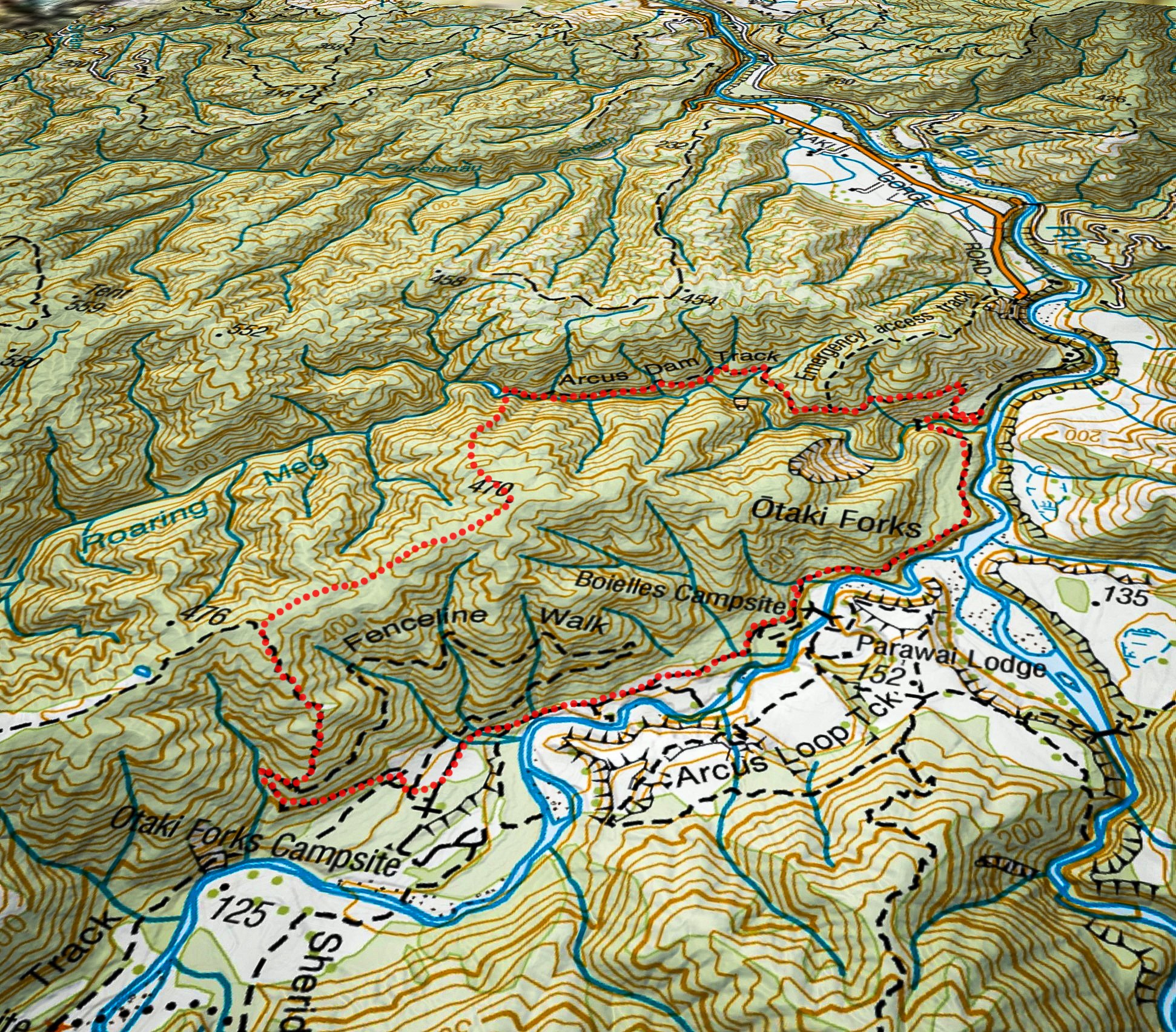
While the Tararua Forest Park is famous for its ridge-top tarns including one on the iconic Mt Hector, few trampers know about its two hydro-lakes. Tucked away near Ōtaki Forks lies the Arcus Dam, a forgotten relic of a 1990s power scheme that nature has since reclaimed. This 5 hour loop offers a fascinating blend of local history and easy bush walking, perfect for those looking to explore the park’s lesser-known corners.
The Arcus Dam: A 1990s Hydro Relic
There are many tarns on the ridge tops of the Tararua Range—some are quite large such as that on Dorset Ridge, and some very small like the one on the summit of Mt Hector. But there is only one natural lake—the pretty pond in the bush near Roaring Stag Hut known as Hapua Korari (refer WTMC 2016 Journal),
However, there is one hydro-lake—the Mangahao No 1 Reservoir just inside the park boundary, plus another abandoned hydro-lake—the Arcus Dam—just outside the boundary.
In the 1990s Charles Arcus and his business partner built an earth dam and natural rock spillway in Roaring Meg (aka Pukeatua Stream) near Ōtaki Forks just outside the Tararua Forest Park boundary. The dam formed a lake that was to store water for a small 1.5 MW hydro power plant.
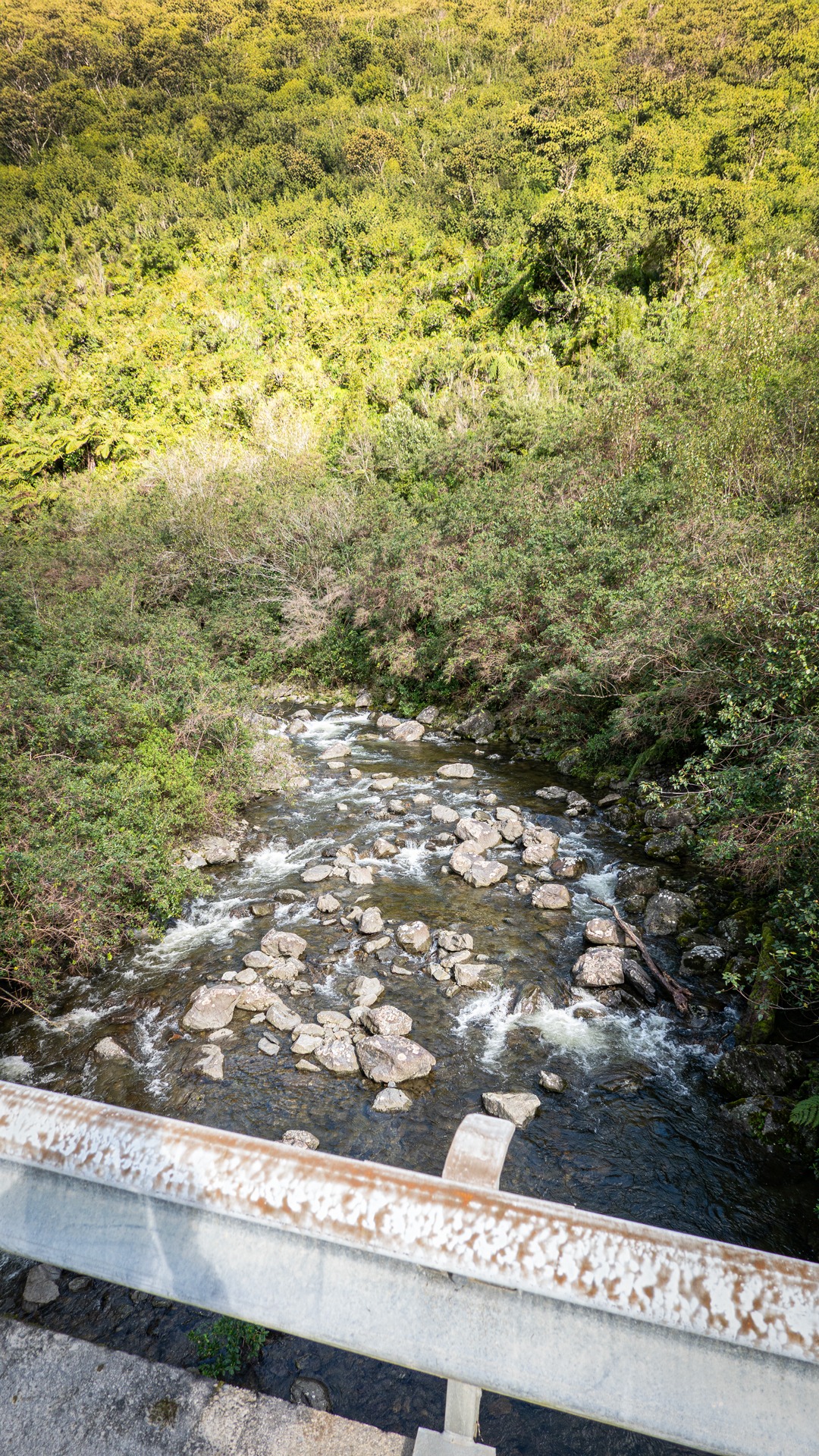
They were to build the powerhouse for the scheme near the junction of Roaring Meg and the Ōtaki River, but a large slip and flood destroyed the building before it could be completed, and the project was abandoned. All that remains today is the spillway and lake.
Hiking the Roaring Meg Loop
Megan wanted to visit the lake so organised a day walk, including getting permission from the landowners. Then she injured herself and couldn’t go. Feeling sympathetic but undeterred the two of us went anyway.
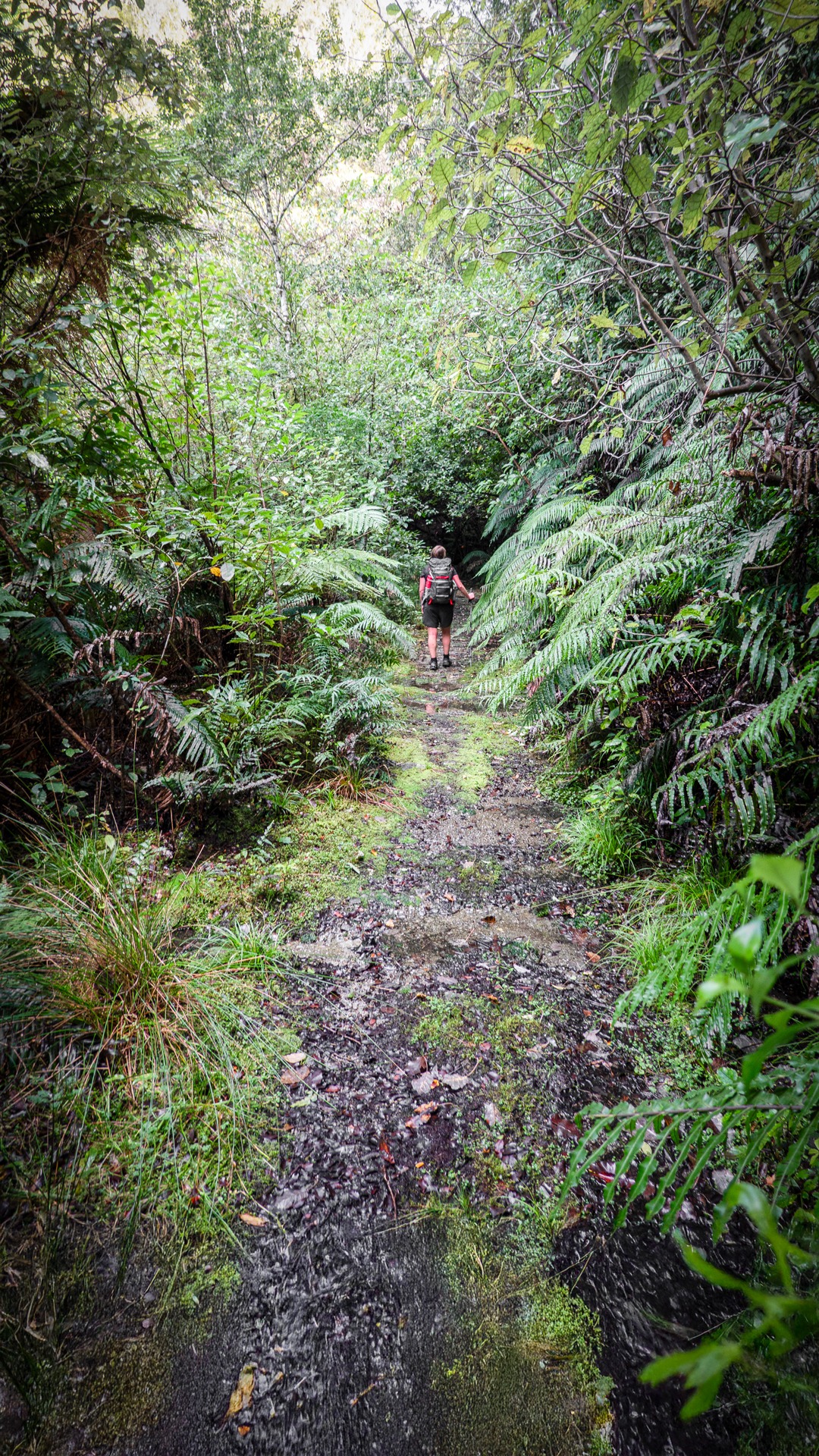
We left the car at Ōtaki Forks and walked the short distance to Roaring Meg. Then it was a very easy wander along the track to the dam—which had an impressive amount of water flowing over the spillway from the recent heavy rain.
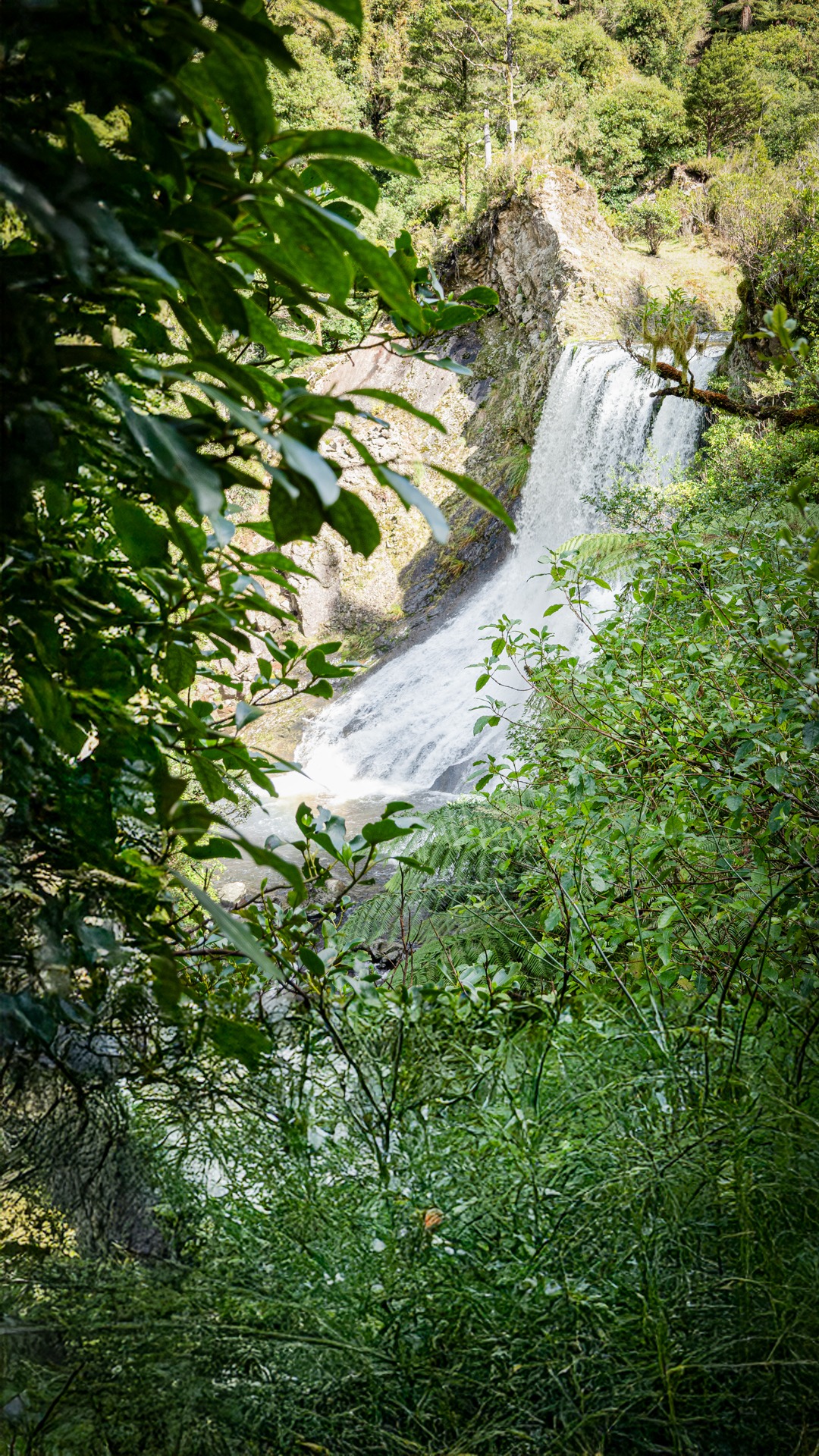
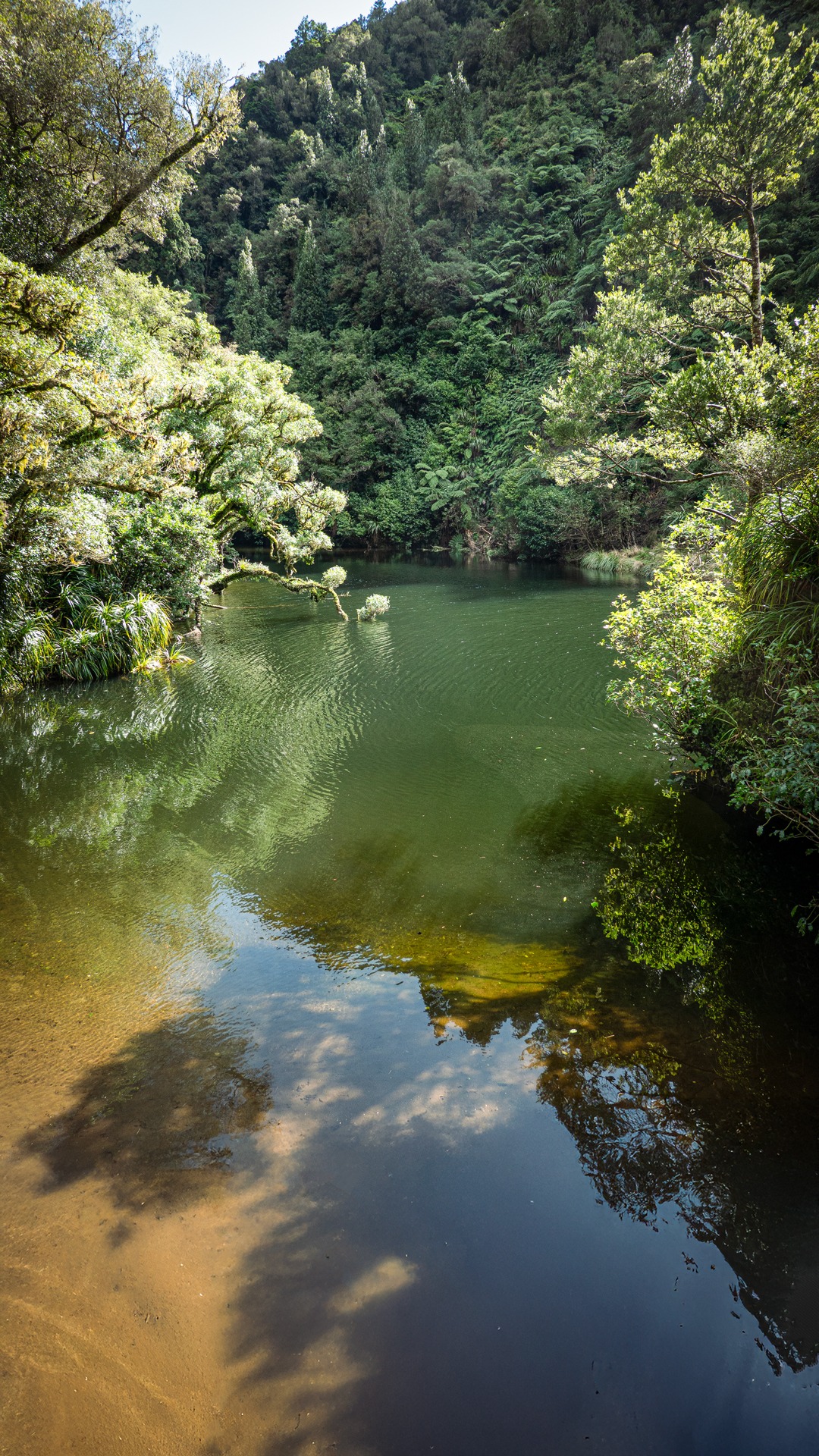
We crossed the stream below the lake mindful that a slip could mean being washed over the spillway with certainly unhealthy consequences.
We enjoyed some time in the warm sunshine on a grassy ledge above the lake before heading up a spur with plentiful supplejack directly to Pt 470.
The Mystery Markers of Pt 470
At the summit we were surprised to be met with a mazelike array of orange tape and metal reflective markers.
Someone had decorated seemingly every second tree with either one or often both. Some markers were clearly heading in the direction we wanted to go—towards Pt 476—so off we went staggered by whoever’s enthusiasm for trail marking.
Then after about 15 minutes the markers just stopped—had the taggers run out of tape or energy we wondered. But actually, it was pleasant to be free from the OTT markers and just make our own way along the ridge to the Pukeatua Track then down to the Ōtaki Road and the short walk back to the car.
A nice short and fairly easy day loop trip of about 5 hours to a pretty lake in an historically interesting area of the (mostly) Tararua Forest Park.
If you enjoyed the writeup of a trip to Arcus Dam, and are interested in other Tararua day walks check out my guide to the Holdsworth area.
Original Publication: This article was originally written by Sarah and published on the Wellington Tramping & Mountaineering Club (WTMC) website. You can view the original post at www.wtmc.org.nz