If you’ve ever found yourself hunting for elusive backcountry spots off the beaten track, navigating “geographical embarrassment,” or frogmarching a hiking buddy up a 1,670-meter peak for 360-degree views, you’ll feel right at home in Ferny Gair Conservation Area.
Lake Alexander in Ferny Gair Conservation Area is a hidden gem that many people have probably not even heard of. Nestled in Marlborough’s backcountry, this hidden gem rewards trampers with pristine beech forests, a tranquil Lake, and classic kiwi huts. Lake Alexander Hut and the more remote Penk Hut are the perfect place to call home for a night or two.

Planning Information
- Location: Ferny Gair Conservation Area, Marlborough, New Zealand
- Topo50 Map: BR27 Waihopai
- Duration: 3-4 days
- Difficulty: Moderate – mostly on well-marked tracks although the route to Penk Hut is not marked aside from a cairn on the ridgeline marking the spur to descend on. The route through Parakeet Valley is significantly rougher than the Lake Alexander track and is a route rather than a track has it has plenty of fallen trees to climb over. The climb to Wild Sheep Saddle from Lake Alexander Hut is steep, and there are some ropes in place to assist.
- Direction: Best walked anticlockwise with the Lake Alexander Track before climbing to Wild Sheep Saddle
- Start / Finish: Avondale Road (turn off SH 63 onto Waihopai Valley Road then into Avondale Road)
- Huts: Lake Alexander Hut (standard, 6 bunks), Penk Hut (standard, 6 bunks)
- Best Season: Late Spring to Autumn (November – April)
- Dogs: Yes, with DoC permits only
- Another tramp in Ferny Gair Conservation Area: Black Birch Biv, the Dinosaur Cave, Mt Harkness & Altimarloch
Land access: Access from Avon valley crosses private land for which permission must be obtained to ensure continued access. Contact Bernard Mason phone +64 21 181 2281 before visiting. If permission is granted, a key can be obtained from the Masons for a small donation to help maintain the area. Access is closed late winter/ early spring due to farming activities.
Permission can be gained to drive the 4WD road to the start of track and conservation land. Vehicles must be parked in the designated area. Failure to park in the designated area may cause future land access to get revoked.
Our Lake Alexander Trip Overview
| Section | Time (hr) | Elevation Gained (m) | Distance (km) |
| Avondale Rd → Lake Alexander Hut | 5 | 687 | 13.7 |
| Lake Alexander Hut → Penk Hut via Wild Sheep Saddle | 6 – 8 | 1,067 | 8.7 |
| Penk Hut → Tummil Hut (private) via Ferny Gair Peak | 10 – 11 | 1,556 | 17 |
| Tummil Hut → Avondale Rd | 1.5 | 95 | 7 |
Navigating Access: The Teme River vs. Private Land
After a trip to Ferny Gair a few months ago to find the elusive “dinosaur cave,” Tony and I were itching to return to explore the southern part of the conservation area including Lake Alexander and Ferny Gair peak itself.
Access in this region can be tricky. A long-standing dispute over a legal public paper road means the Teme River route is currently unavailable. Fortunately, the Ferny Gair Conservation Area remains accessible thanks to a generous local landowner who allows trampers and hunters to pass through his land.
Before heading toward Lake Alexander, we met with the landowner, Bernard (Bernie) Mason. Bernie’s passion for the land is evident; he has dedicated countless hours to track maintenance, pest trapping, and installing informative signage.
Day 1: Avondale Rd to Lake Alexander
Tony and I began our walk on a sweltering morning, covering 7km on a 4WD track across farmland before reaching the cool relief of the DoC bush track. Bernie’s handiwork was immediately apparent—he’s installed ropes to assist with stream crossings and the steeper sections of the trail. In general, the trail is not very technical and is easy walking.
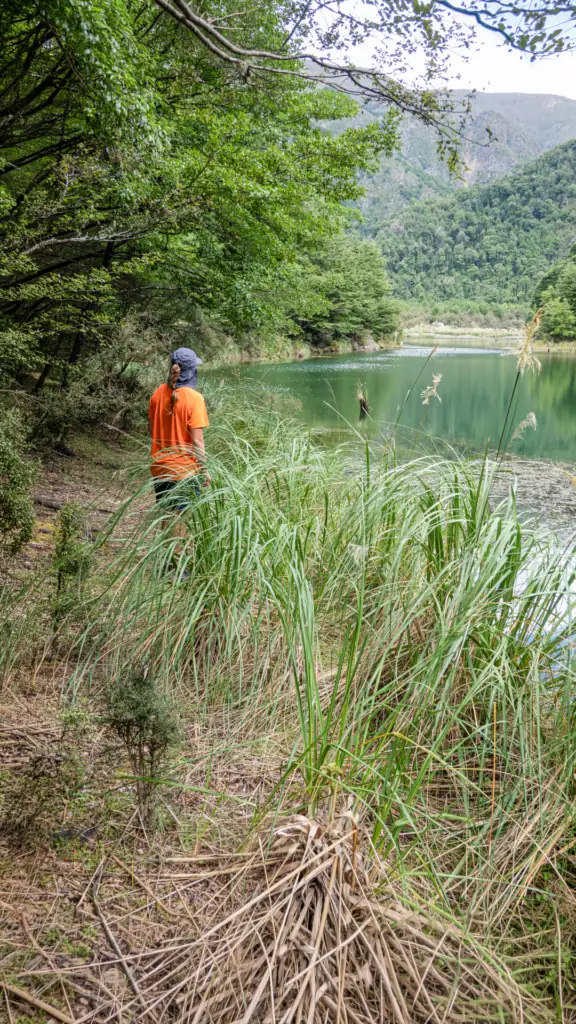
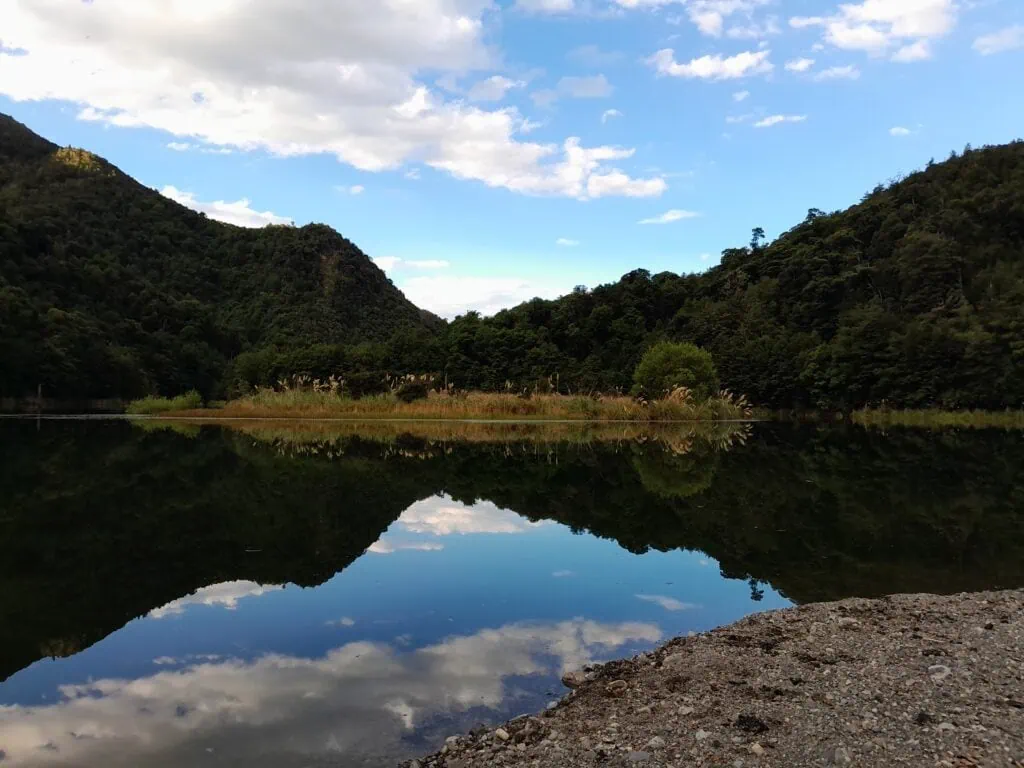
The track follows the Tummil River up through a beautiful mix of beech and manuka forest. There was plenty of hook grass along the way and we both collected a lot on our legs. After about 3 hours, we reached the northern end of Lake Alexander. It is a stunning, secluded spot, though sadly filling with gravel from the upper valley. Bernie had a sign informing us that the lake level had dropped approximately 3 metres when there was a big slip in the creek that the lake drains into.
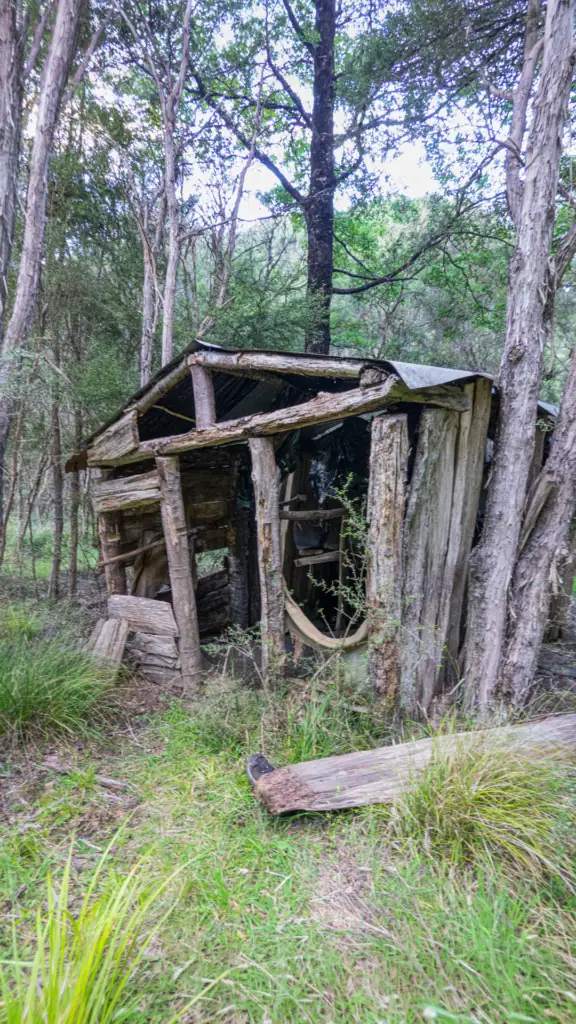
While I joked about swimming to the small island in the center to camp, Tony wisely chose the comfort of Lake Alexander Hut. Lake Alexander Hut was previously known as Tummil Hut and flown to the site in 2010. The old hut built from manuka branches is still present. From reading the hut book it seems this tidy, six-bunk hut is a favourite for families, though it could definitely use a table for a round of Bananagrams! I went for a swim and found the level of the lake drops off very quickly.

Day 2: Lake Alexander Hut to Penk Hut via Wild Sheep Saddle
The following morning involved a steep climb up the stream to Point 951, informally known as Wild Sheep Saddle. Thanks to Bernie’s ropes, the ascent was manageable, though I wouldn’t recommend descending this way.
⚠️ Good to know: The track up to Wild Sheep Saddle crosses a creek about 140m below the saddle. There is a marker from Bernie that it’s the last water for the day. There is no other water source until Penk Hut unless a short deviation is made from the spur descending to Penk Hut. The marked track is also slightly south from where the track is shown on the topo map.
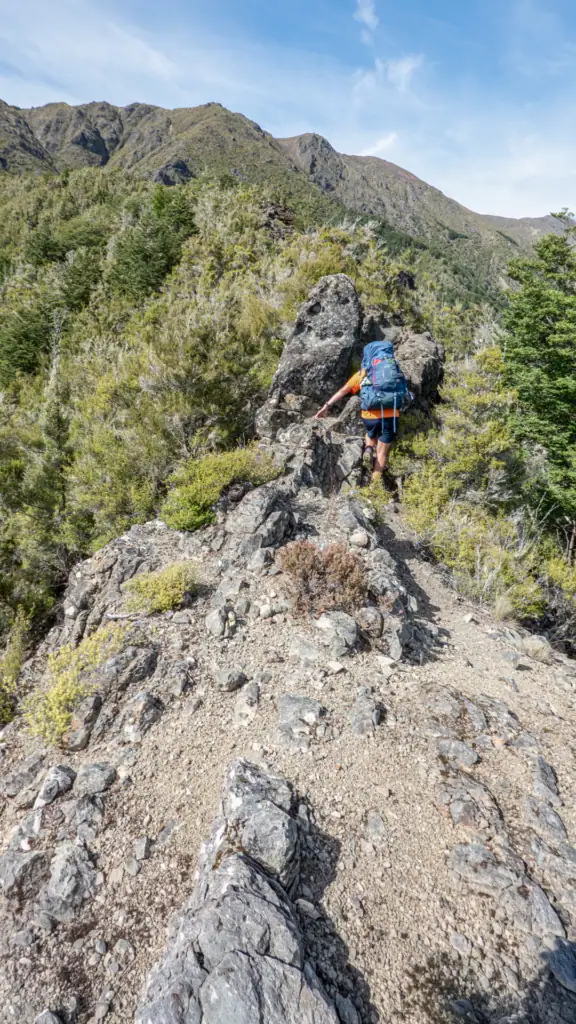
From the saddle, we climbed towards point 1411. There was a good foot trail up this ridge and even though it’s not shown as marked on the map, it was indeed marked by orange track markers and snow poles. As we watched a helicopter working across the valley, either hunting or aerial spraying wilding pines, heavy clouds began to roll in. With convective rain forecasted, we decided to bypass the summit for the day and head straight for Penk Hut.
⚠️ Route warning: After point 1411, there is no marked track.
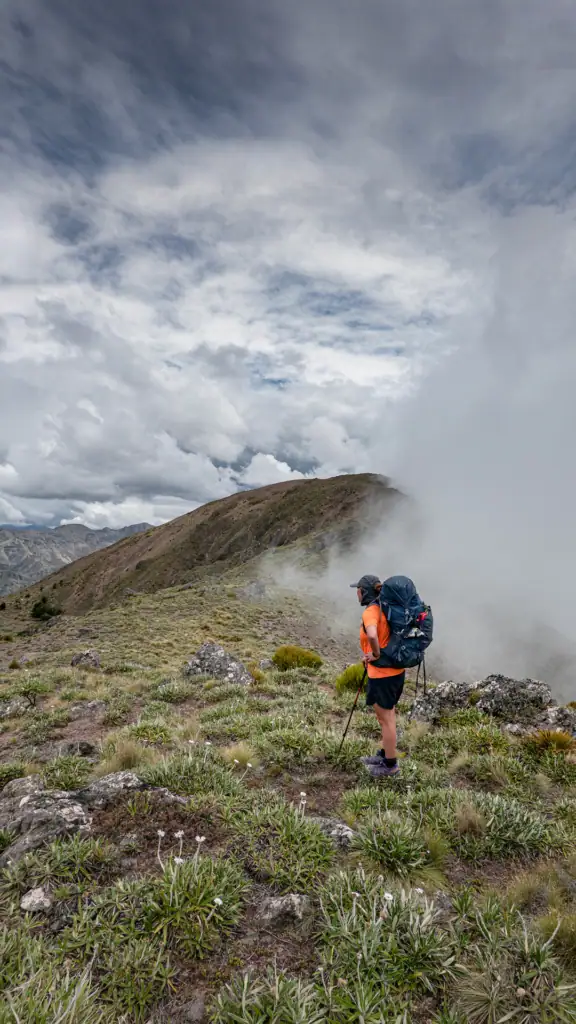
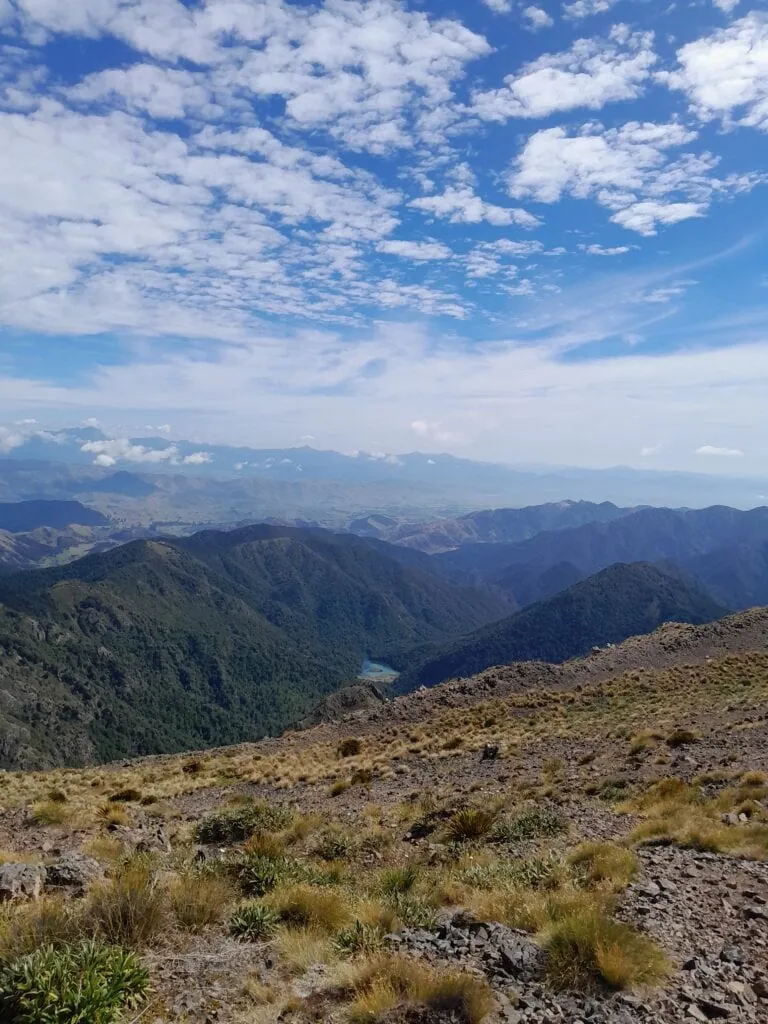
The descent down a steep spur was marked by a large rock cairn (slightly north of pt 1517). While the trail wasn’t always well-defined, the small amount of bush that had to be travelled through was open, but we were mostly on the edge of the bush. The hut can be seen from far up the spur and we had to follow the spur all the way down to the Penk River to avoid the steep drop-offs into a creek.
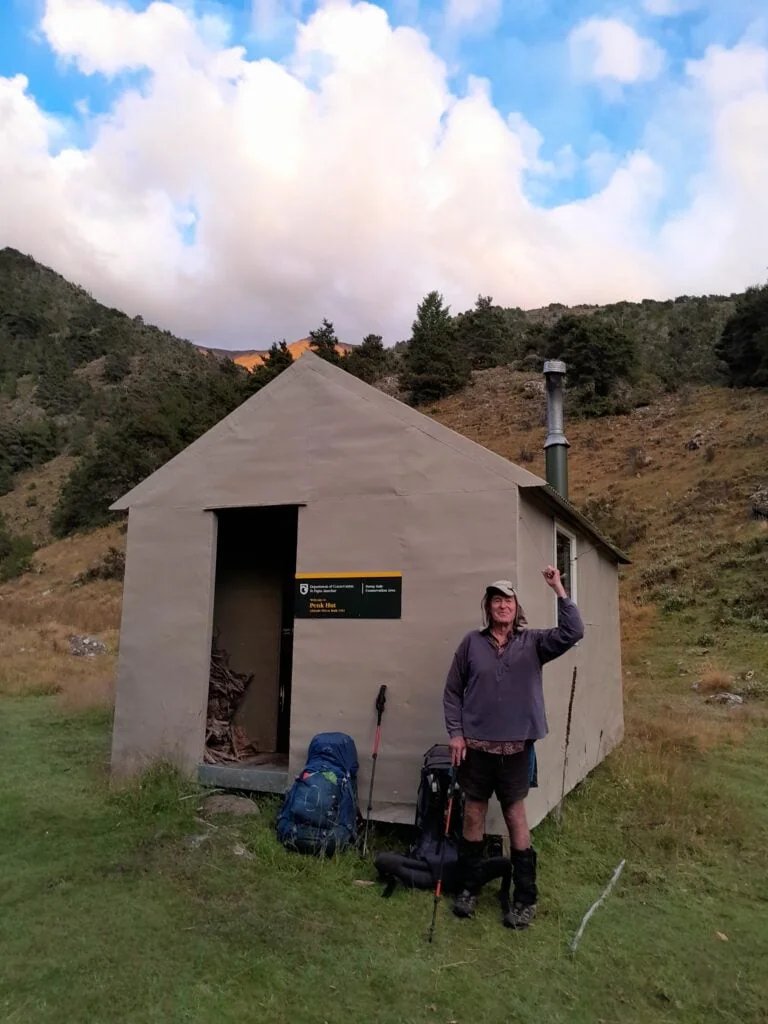
Penk Hut
At Penk Hut, we read in the hut book that most people were flown into the hut to hunt; and the few people who walked in came up the Penk River from Reserve Hill. There was only the odd person who had walked in the same way as us, probably due to the amount of climbing and descending involved!
Day 3: Penk Hut to Tummil Hut via Ferny Gair Peak
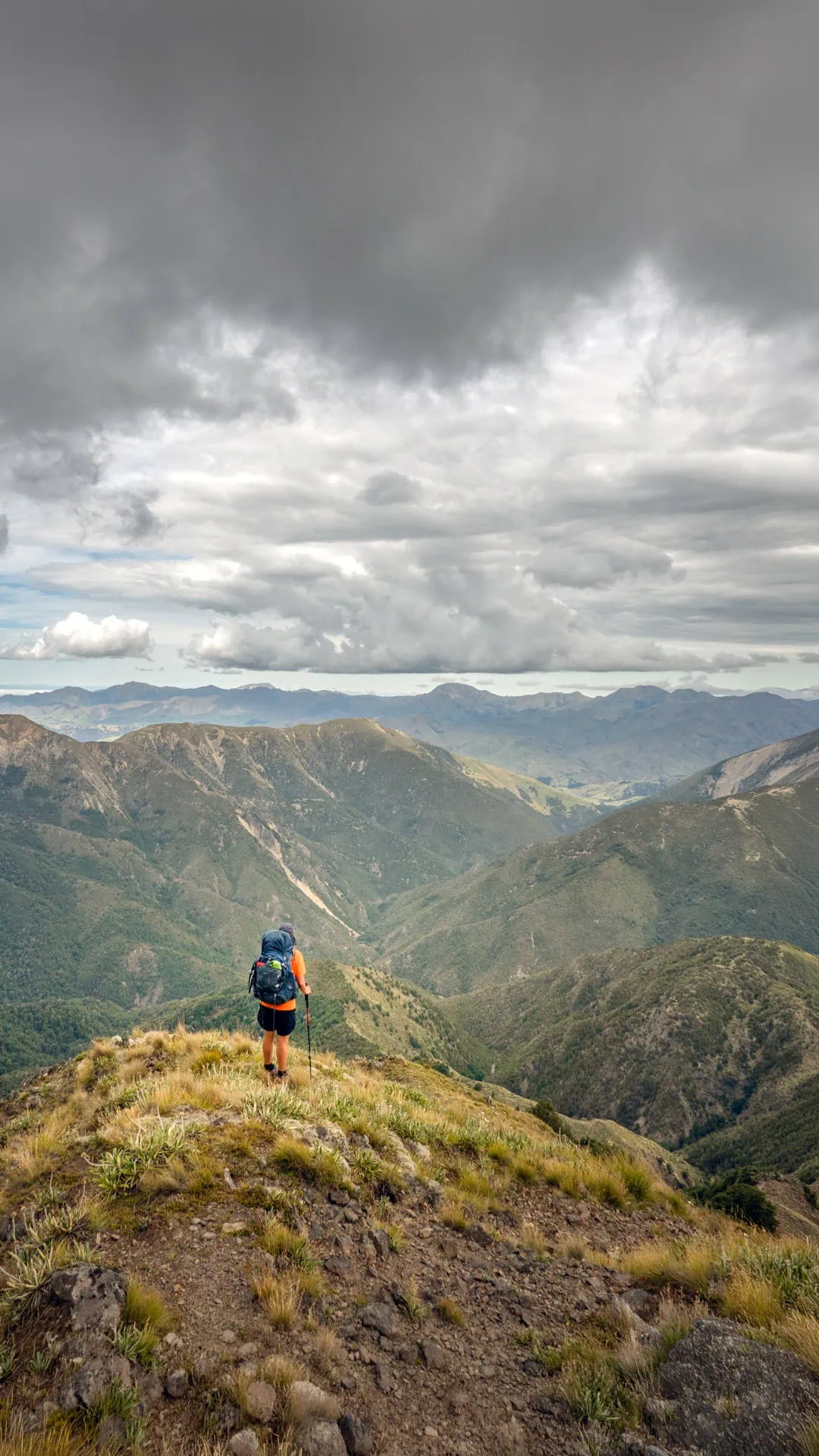
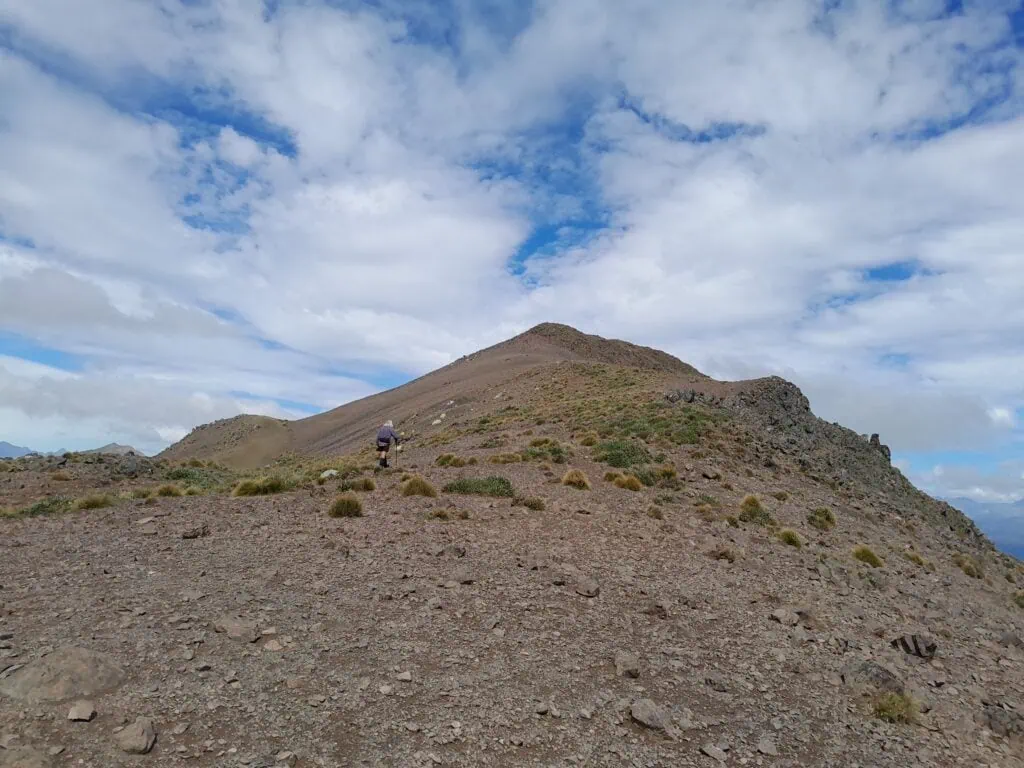
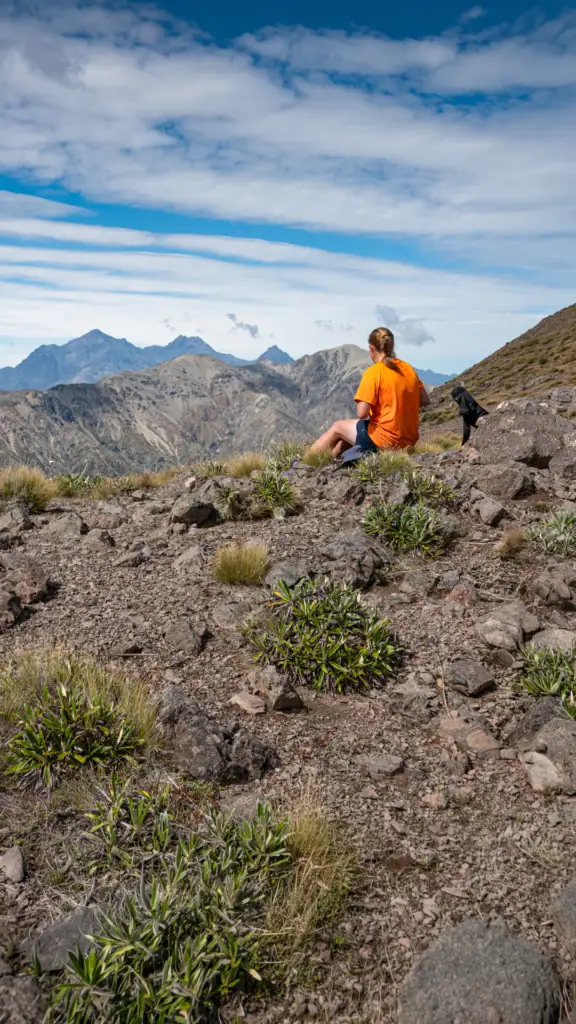
After a night of drying gear by the fire, we set off early to beat the heat. Tony wanted me to go ahead to summit Ferny Gair while he made his way up to the ridge from Penk Hut but I wasn’t going to let Tony skip the summit! I “frogmarched” him up to Ferny Gair Peak (1,670m), and the effort was well worth it. The 360-degree views were spectacular, spanning from Glenee North and South to the distant silhouettes of the Inland Kaikōura Peaks (Tapuae-o-Uenuku, Mt Alarm, and Mitre Peak). We also had a great view across to the Richmond Range that I had traversed. Tony has now learnt that in Ferny Gair he will get “frogmarched” places.
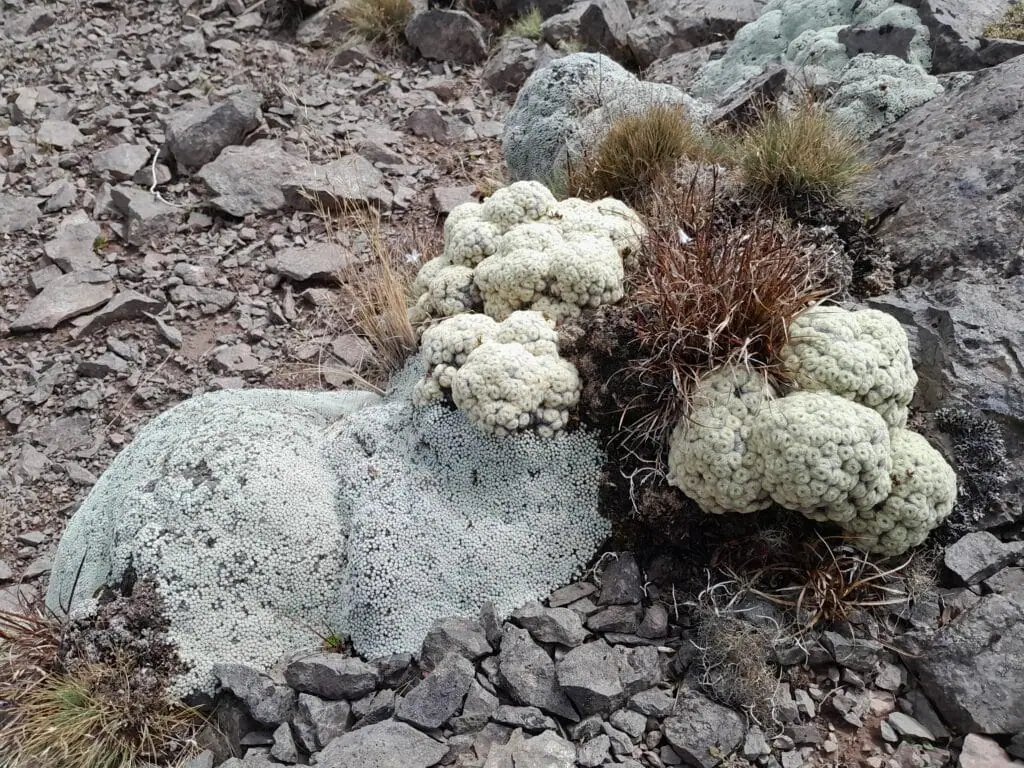
I enjoyed the vegetable sheep (raoulia) along the ridgeline. These alpine plants have always fascinated me by how intricate they are.
Geographically Embarrassed in Parakeet Valley
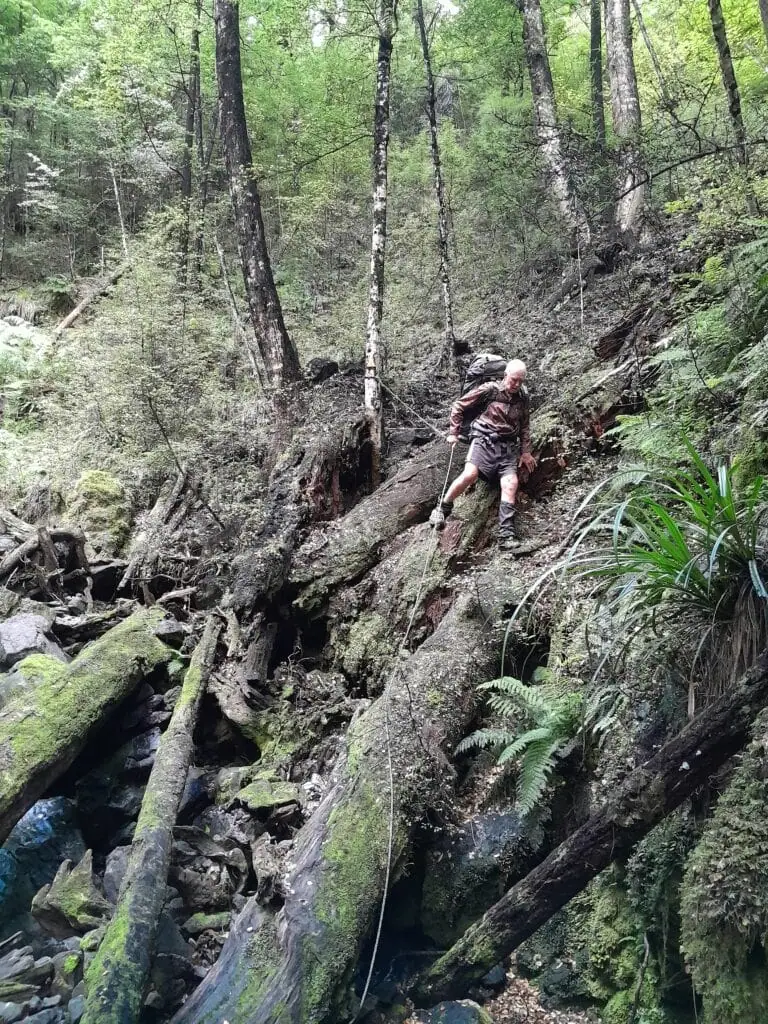
The return trip from Wild Sheep Saddle into the valley informally called “Parakeet Valley” proved a bit more challenging. This section of the Lake Alexander route was rough, with significant windfall slowing our progress.

Near the end of what had been a long day, we hit a moment of confusion and what I call “geographical embarrassment.” My topo map suggested we had missed a junction and were heading east toward Pig Whare Saddle. After a few minutes of confusion, I remembered that Bernie had provided us with a paper map with the trails marked and some handwritten notes. I then realised that the track had been rerouted and the map I was using had not been updated.
⚠️Route Warning: The marked trail differs in a few places from what is shown on the digital topo map. Bernie can provide a map showing the correct marked trail. This happens about 300m away from the Pig Whare Saddle Junction. The track clearly crosses the creek and heads away from the creek before joining back up with it again.
The ‘Resort’
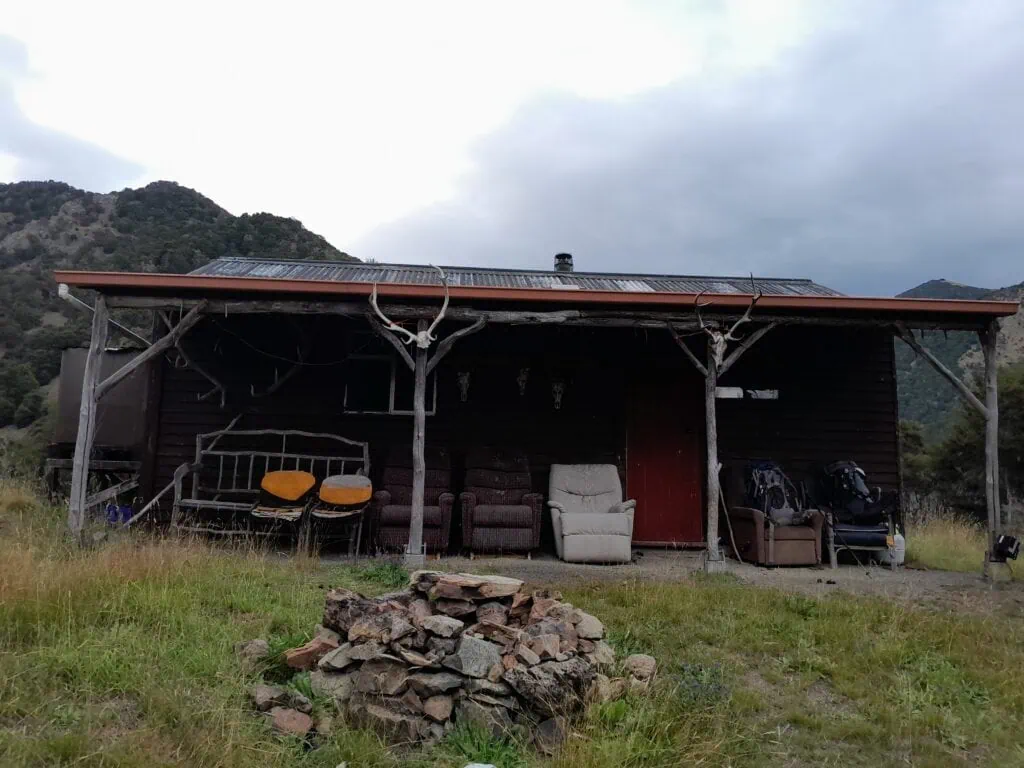
Confident we were moving in the correct direction, the track crossed by the DoC land boundary back onto Bernie’s property, passing a hunting hut before hitting a 4WD road. Bernie had mentioned a spot called “The Tummil Ridge Resort”—a private hut complete with solar power and gas, located just above the start of the DOC track. He had generously given us permission to use this. Exhausted but determined, we tackled one last hill to get there. Reading the hut book at “The Resort” was the perfect end to another rugged adventure in Ferny Gair Conservation Area.